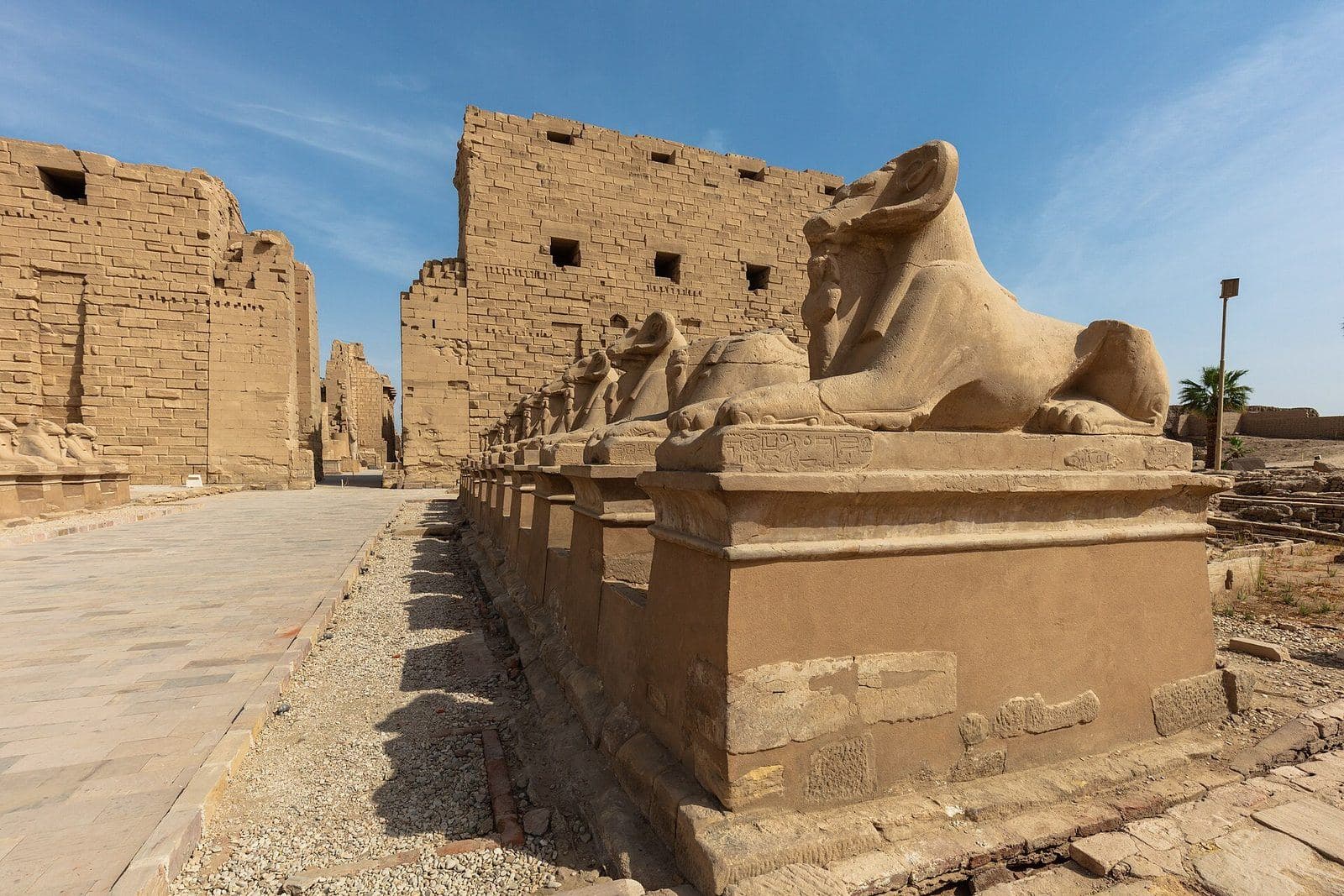
The Opet Festival
Luxor Temple was the setting for the Opet Festival, when the statues of Amun, Mut and Khonsu were carried from Karnak to Luxor in a great procession, by land along the Avenue of Sphinxes or by river on golden barques. The festival renewed the king's divine power each year.
Layers of history
Amenhotep III built the graceful colonnade and inner sanctuary; Ramses II added the great pylon, colossal statues and a pair of obelisks — one of which now stands in the Place de la Concorde in Paris. Alexander the Great rebuilt a shrine inside, Romans turned part of the temple into a military shrine, and the Mosque of Abu al-Haggag, still in use, sits on top of the ancient walls.
A mosque on the temple
By the Middle Ages, sand and houses had buried much of Luxor Temple. The Mosque of Abu al-Haggag, a 13th-century Sufi saint still honoured with a festival every year, was built on top of the rubble — which is why its doors today open several metres above the temple floor.
Rome in Luxor
In the late 3rd century AD, the Romans turned part of Luxor Temple into a shrine of the imperial cult inside a military camp, plastering over the pharaonic reliefs and painting them with scenes of the emperors. Conservators from the American Research Center in Egypt cleaned these rare Roman wall paintings in the 2000s, revealing their colours.
Visiting tips
- Visit after sunset, when the temple is lit up and cooler.
- Walk part of the Avenue of Sphinxes from the temple's front.
- Arrive just before sunset to see the temple in daylight and then lit up.