Carved from the hill
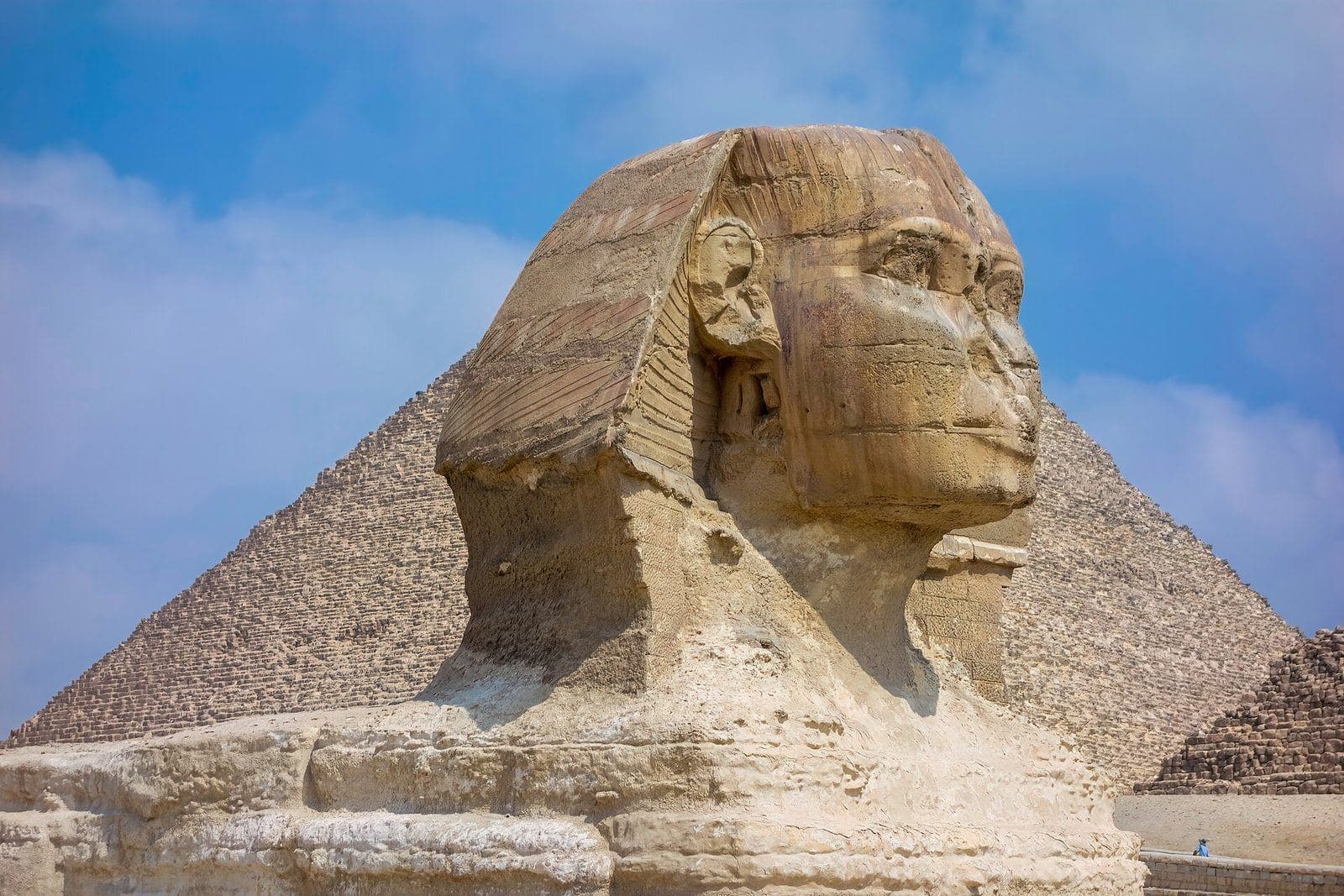
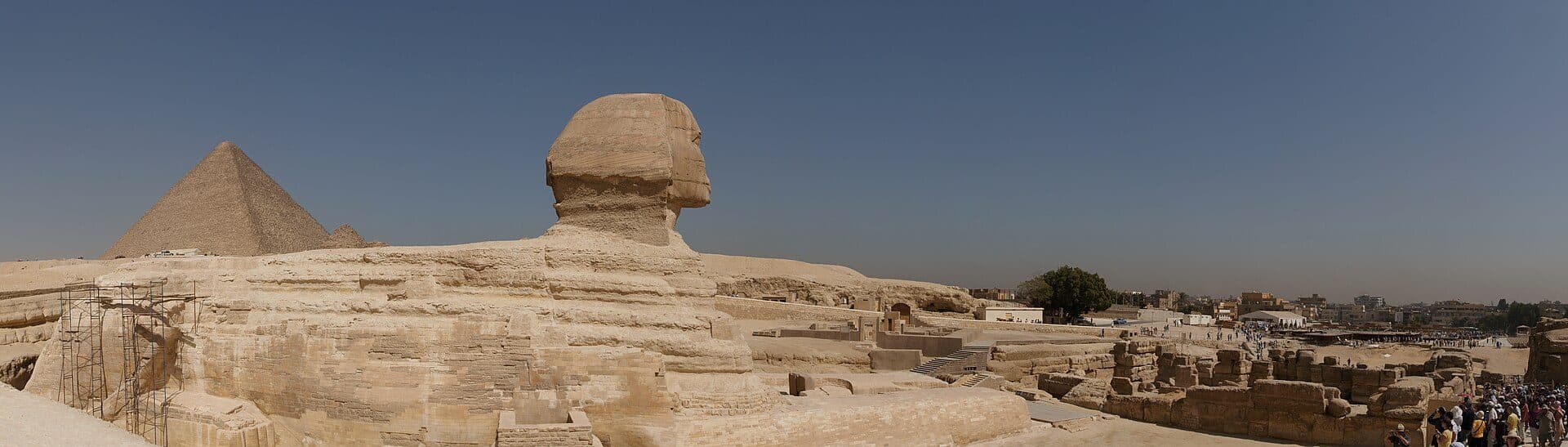
The Sphinx wasn't built — it was left behind. Workers cut away the limestone around a natural outcrop and shaped what remained into a recumbent lion with the head of a king wearing the royal nemes headcloth. Most Egyptologists attribute it to Khafre because it sits beside his causeway and valley temple, and its face is thought to be his portrait.
Buried and rediscovered
Desert sand has repeatedly buried the Sphinx up to its neck. Between its paws stands the Dream Stela of Thutmose IV (about 1400 BC), which tells how the young prince fell asleep in its shadow and dreamed that the Sphinx promised him the throne if he cleared the sand away. Full excavation of the body only came in the 20th century.
The missing nose
A popular story blames Napoleon's soldiers for shooting off the nose, but drawings made before his 1798 expedition already show it missing. Marks left by tools suggest it was deliberately chiselled off; the 15th-century historian al-Maqrizi records that a man damaged the statue in 1378. Fragments of the stone beard are in the British Museum and in Cairo.
Repaired through the ages
The Sphinx has been restored many times. Thutmose IV's Dream Stela records that he cleared it of sand around 1400 BC, and blocks of limestone were added to its body and paws in his reign and again in the Ptolemaic and Roman periods to protect the soft, crumbling rock. Modern conservation campaigns — the most extensive between the 1980s and 1998 — replaced failing later repairs and treated the stone against wind and salt damage.
Khafre's valley temple
Beside the Sphinx stands the valley temple of Khafre, built of enormous granite-clad limestone blocks with a polished alabaster floor. When Auguste Mariette excavated it in the 1860s, he found the famous seated statue of Khafre in hard diorite, protected by the falcon god Horus, now one of the great treasures of Egyptian sculpture. From here a causeway ran up to the king's pyramid.
Photos
Visiting tips
- The best close-up view is from the terrace of Khafre's valley temple.
- Late afternoon light is the most flattering for photos.
- The evening sound and light show uses the Sphinx as its narrator.
- Walk through the valley temple to reach the Sphinx viewing terrace — it's the way the ancient procession came.