The last line before the Nile
By mid-1942, Axis forces under Erwin Rommel had pushed across Libya into Egypt, threatening Alexandria, Cairo and the Suez Canal. El-Alamein was the last defensible position: a gap of about 60 km between the sea and the impassable Qattara Depression. In the First Battle of El-Alamein in July, the Allied Eighth Army halted the advance.
The turning point
Under Bernard Montgomery, the Eighth Army launched the Second Battle on 23 October 1942 with a massive artillery barrage. After nearly three weeks of fighting through minefields, the Axis forces retreated. Winston Churchill later wrote: 'Before Alamein we never had a victory. After Alamein we never had a defeat.'
Remembering the fallen
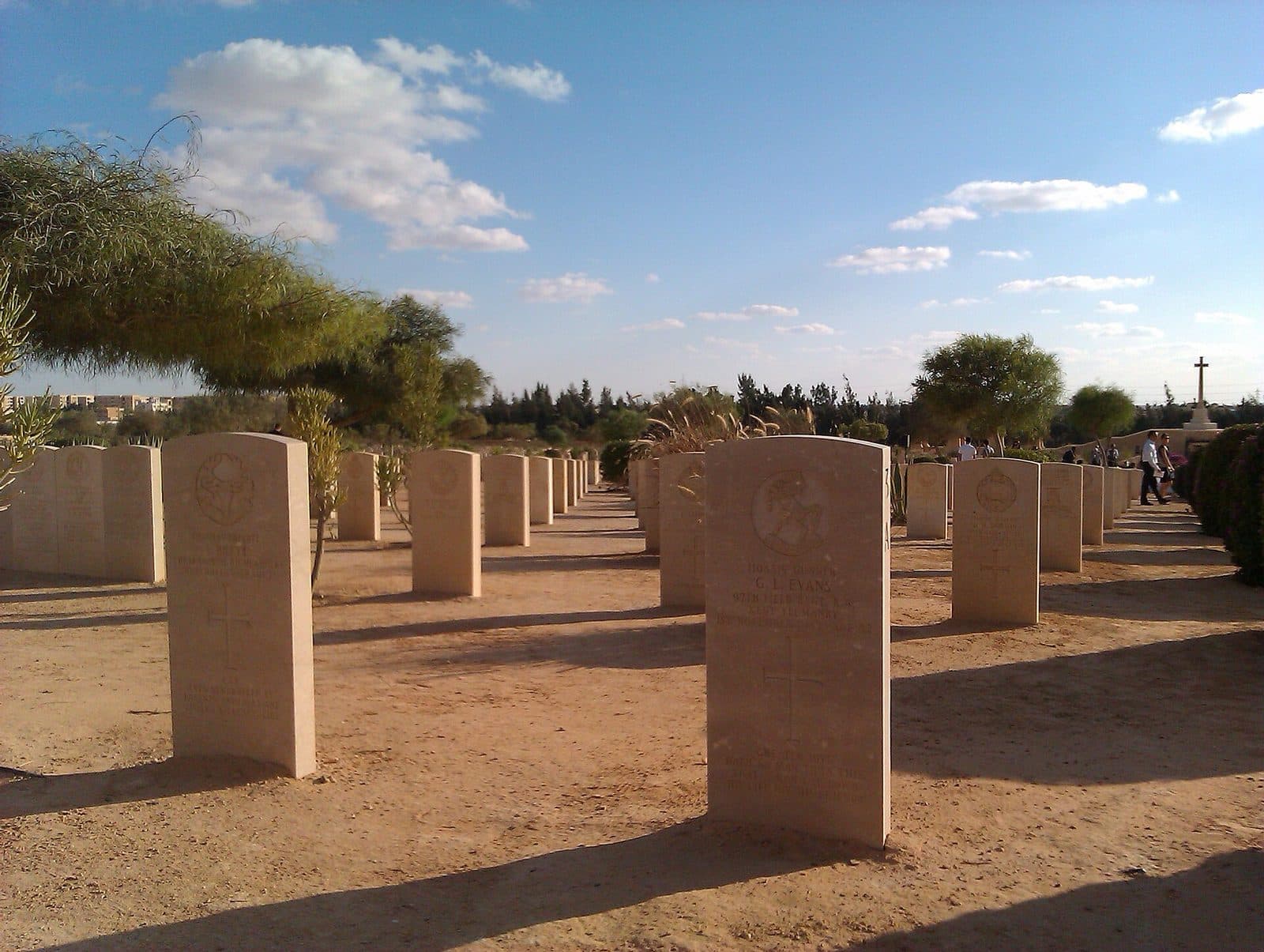
The Commonwealth War Cemetery holds thousands of graves of soldiers from Britain, Australia, New Zealand, South Africa, India and elsewhere. The German memorial is a fortress-like octagon on a hill above the sea, and the Italian memorial is a tall white tower. The El-Alamein Military Museum explains the campaign with maps, uniforms and vehicles.
Lightfoot and Supercharge
The Second Battle of El-Alamein opened on the night of 23 October 1942 with Operation Lightfoot, when infantry and engineers cleared paths through deep minefields under a barrage from nearly 900 guns. After days of costly fighting, Operation Supercharge broke through in early November, and on 4 November Rommel began his retreat — defying Hitler's order to stand fast.
The Military Museum
The El-Alamein Military Museum opened in 1956 and was renovated in 1992. Its halls cover the North African campaign from the viewpoint of each army, and outside stand tanks, guns and vehicles from the battle.
Photos
Visiting tips
- Easily combined with a beach stay on the North Coast.
- Remembrance ceremonies are held around the October anniversary.
- The German and Italian memorials are a few kilometres west of the town — ask your driver to include them.